

鄧石如 Deng Shiru (1743–1805), originally named Yan, styled Shiru, was born in Huaining, Anhui province. He was a seal engraver and calligrapher during the Qing dynasty and the founder of the Deng School of seal engraving. He was a renowned calligrapher, seal engraver, and scholar of epigraphy in the Qing dynasty, credited as the founder of the “Deng School” of seal engraving. He was a highly innovative calligrapher during the mid-Qing period, excelling in various script styles, particularly in seal script and clerical script. His works displayed a unique style and became a significant influence in the field of stele studies.
Bao Shichen, a Qing scholar, referred to Deng Shiru’s seal script in “Yi Zhou Shuang Ji” as being influenced by two Lis (Li Si and Li Yangbing), while also incorporating the essence of Tai Shi Zhou and slightly referencing the spirit of the clerical script. Deng’s style featured sharp and forceful strokes, with a slightly square-shaped character form resembling the Qin and Han dynasty tile inscriptions. Due to his exceptional artistic contributions, Deng Shiru is regarded as the “third milestone” in the development of seal script. He drew inspiration from the calligraphy of Li Si in the Qin dynasty and Li Yangbing in the Tang dynasty, merging it with the spirit of clerical script, resulting in a divine style. Known for his integrity, Deng traveled extensively to famous mountains and rivers, supporting himself through his calligraphy and seal carving. His extant works include the collection “Wan Bai Shan Ren’s Surviving Seal Engravings.”
Deng Shiru’s artistic achievements primarily lie in the fields of seal script and clerical script. In seal script, he initially studied the styles of Li Si and Li Yangbing and later learned from inscriptions such as the “Chan Guo Mountain Stele,” “San Gong Mountain Stele,” “Tian Fa Shen Chen Stele,” stone drum inscriptions, and inscriptions on Yi vessels. His character forms were slightly square-shaped, resembling Qin and Han dynasty tile inscriptions and Han dynasty inscriptions. This breakthrough surpassed the limitations of the Yu Zhuzi style that had persisted for over a thousand years, showcasing a distinctive approach. In his clerical script, he followed the style of Han dynasty inscriptions, transforming the rectangular structure into a longer format, and modifying the graceful strokes to create a more solemn and majestic composition. His calligraphy in clerical script during the Qing dynasty had a unique style, characterized by its imaginative quality. Deng Shiru also excelled in other script styles. In his regular script, he drew inspiration from the stele versions of the Six Dynasties and incorporated the postures of Ouyang Xun and Ouyang Tong, father and son, from the Tang dynasty. He used both square and round brushstrokes, resulting in dense and vigorous characters that exuded a resolute and powerful aura. In his running script, he mainly absorbed the Jin and Tang dynasties’ cursive script, exhibiting a heavy and restrained brushwork and skillful use of white space, capturing the essence of mature strength and misty charm. His exceptional skills and achievements established him as the foremost calligrapher of the Qing dynasty during his time.
鄧石如(1743年—1805年),初名琰,字頑伯、石如,別號完白山人,後以字行。安徽懷寧人。清代篆刻家、書法家,鄧派篆刻創始人。清代著名書法家、篆刻家、金石學家,篆刻『鄧派』的創始人。是清代中葉一位富有創造性的書法家。真、草、隸、篆無一不工,尤精篆隸,別具一格,開一代碑學之宗。清包世臣在《藝舟雙楫》中稱:“完白山人篆法以二李(李斯、李陽冰)為宗,而縱橫闔闢之妙,則得之史籀,稍參隸意。殺鋒以取勁折,故字體微方,與秦漢瓦當額文為尤近。”鄧石如因其傑出的藝術貢獻,被後世稱為“篆書的第三個里程碑”。他以秦李斯、唐李陽冰為宗,稍參隸意,稱為神品。性廉介,遍遊名山水,以書刻自給。有《完白山人篆刻偶存》存世。
鄧石如的書法藝術成就主要表現在篆、隸的造詣。其篆書初學李斯、李陽冰,後學《禪國山碑》、《三公山碑》、《天發神讖碑》、石鼓文以及彝器款識、漢碑額等。其字體微方,接近秦漢瓦當和漢碑額,突破了千年來玉箸篆的藩籬,別開生面。其隸書師法漢碑,然結體變其扁方為長方,筆劃改其飄逸為凝重,章法異其嚴整而磅礴,使清代隸書風格獨具意象。鄧石如在其他書體上也造詣精深。其楷書取法六朝碑版,兼取唐代歐陽詢、歐陽通父子二人體勢,方圓筆互用,結字茂密,有斬釘截鐵、力拔千鈞之態。其行草書主要吸收晉、唐草法,筆法凝重遲澀、善用飛白,得老辣蒼勁、煙雨蒼茫之勢。如此出類拔萃,是以其書法藝術在當時就被人推為清代第一。
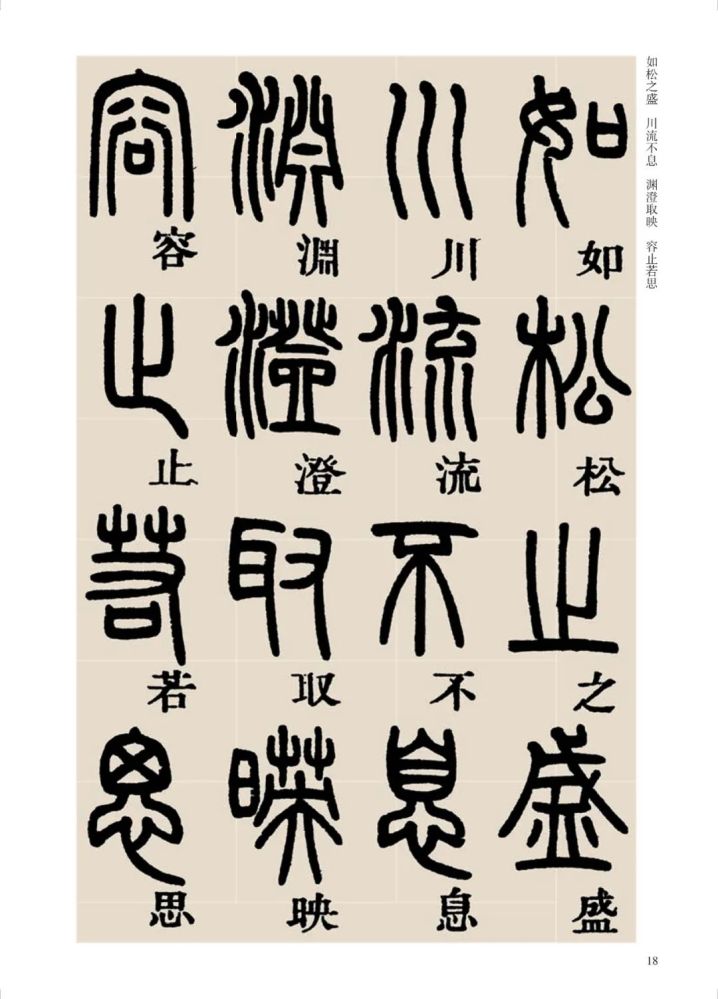
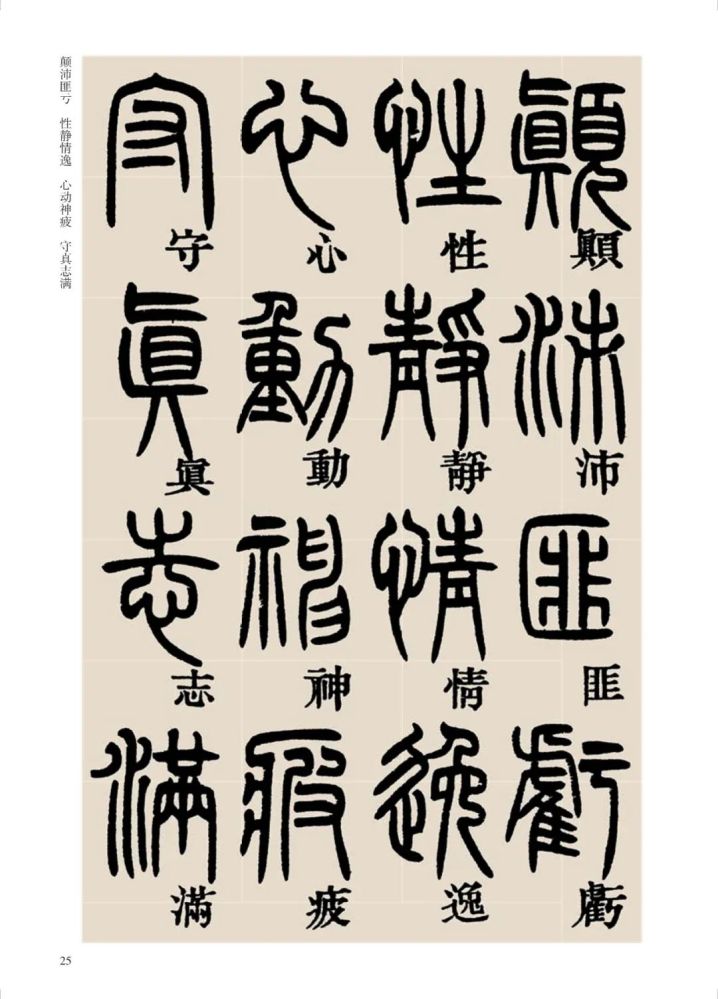
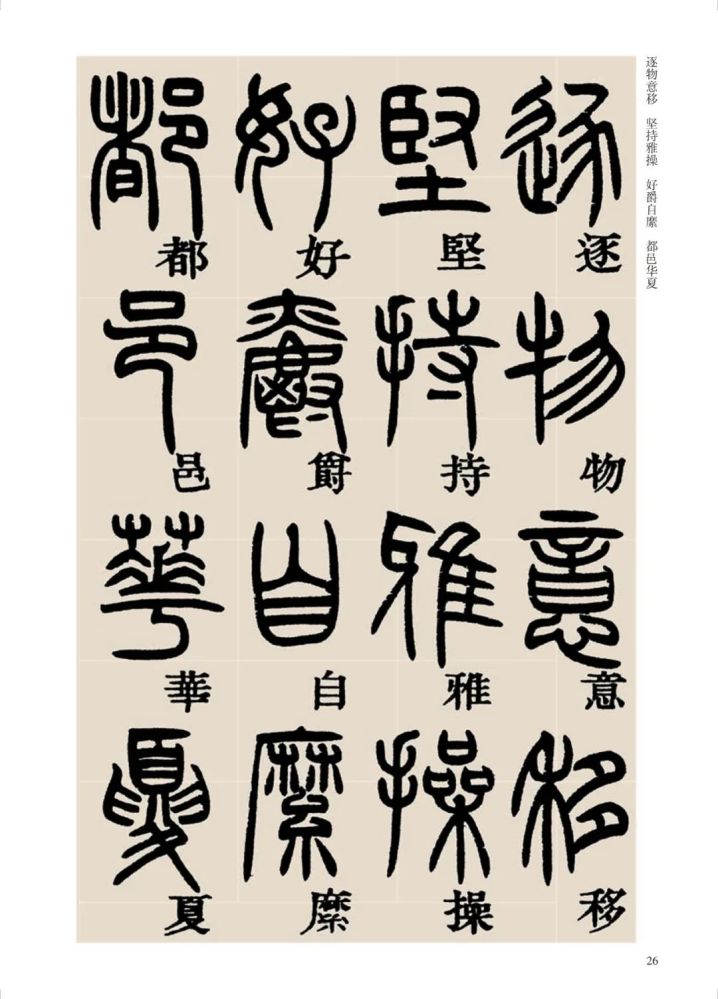
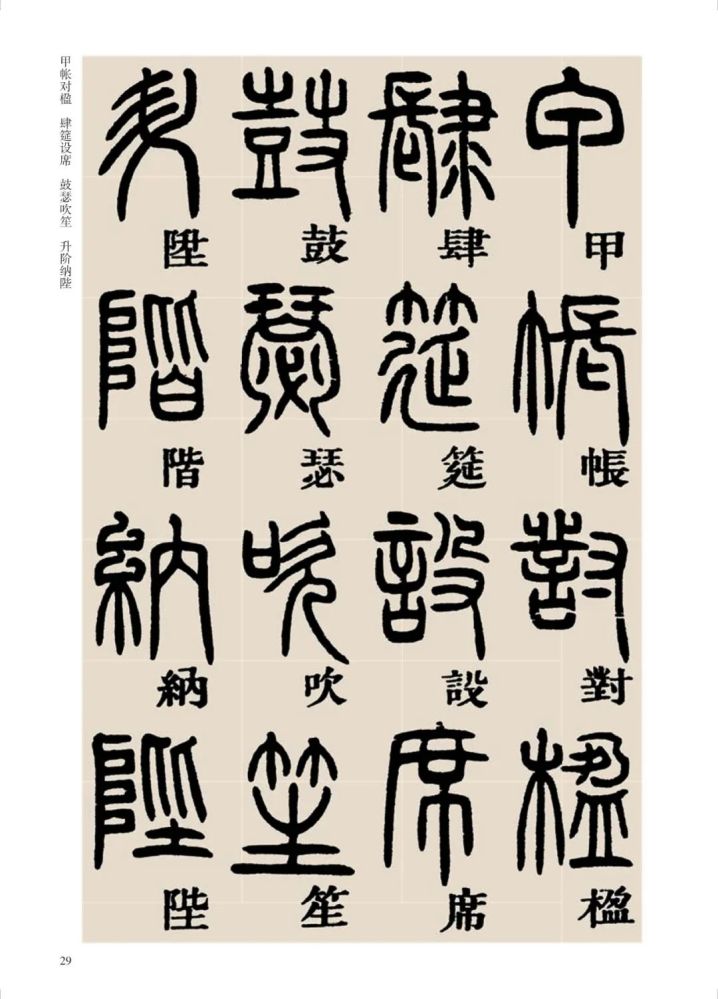
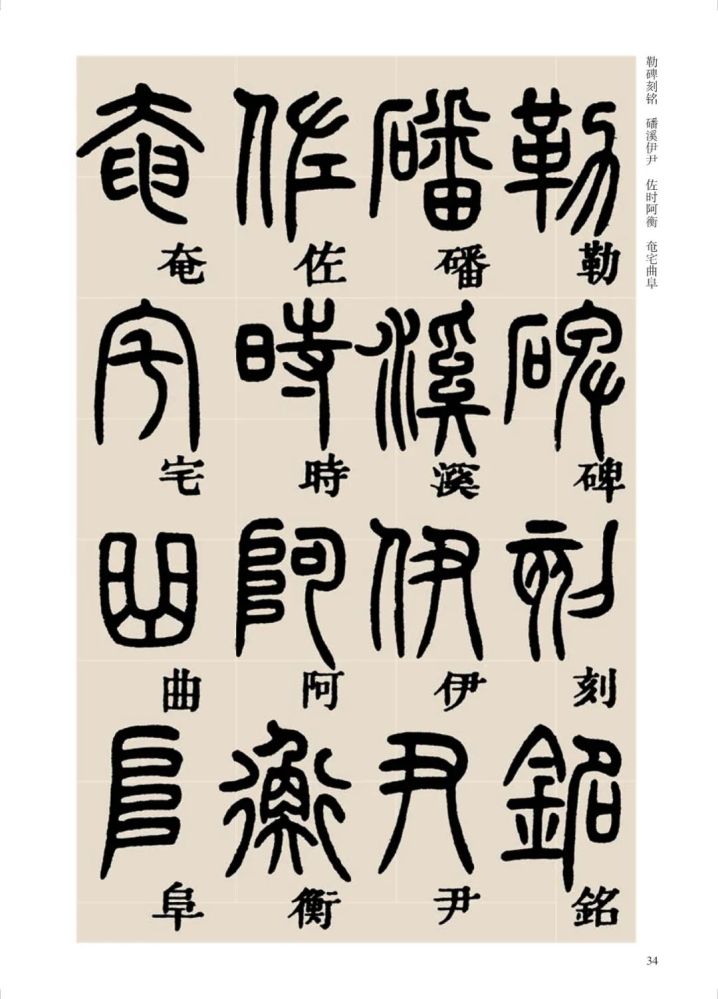
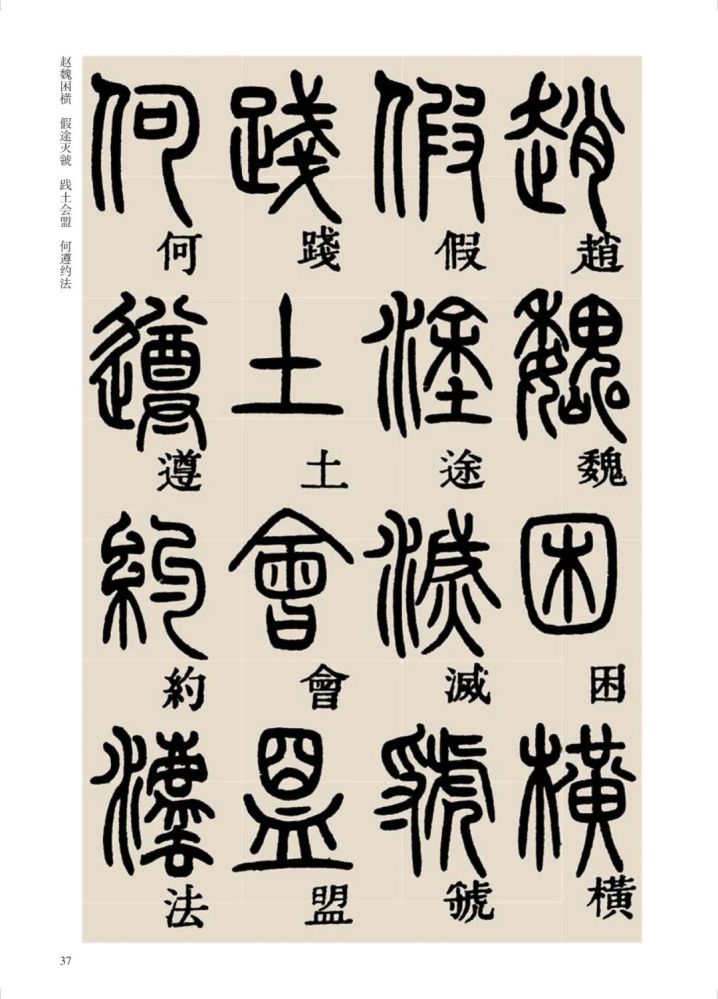
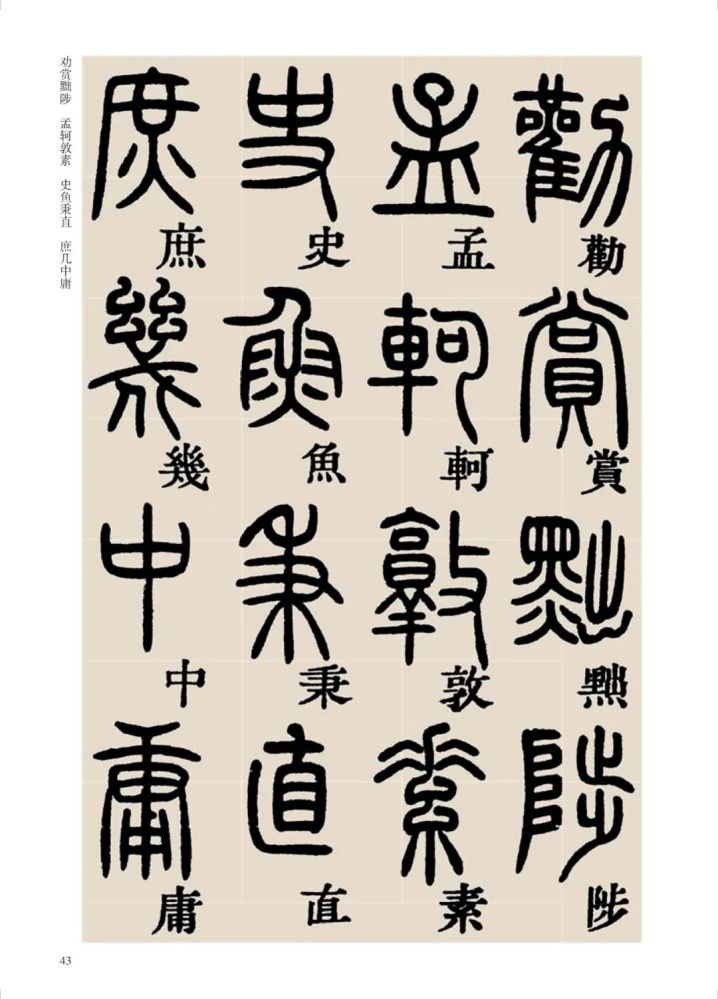
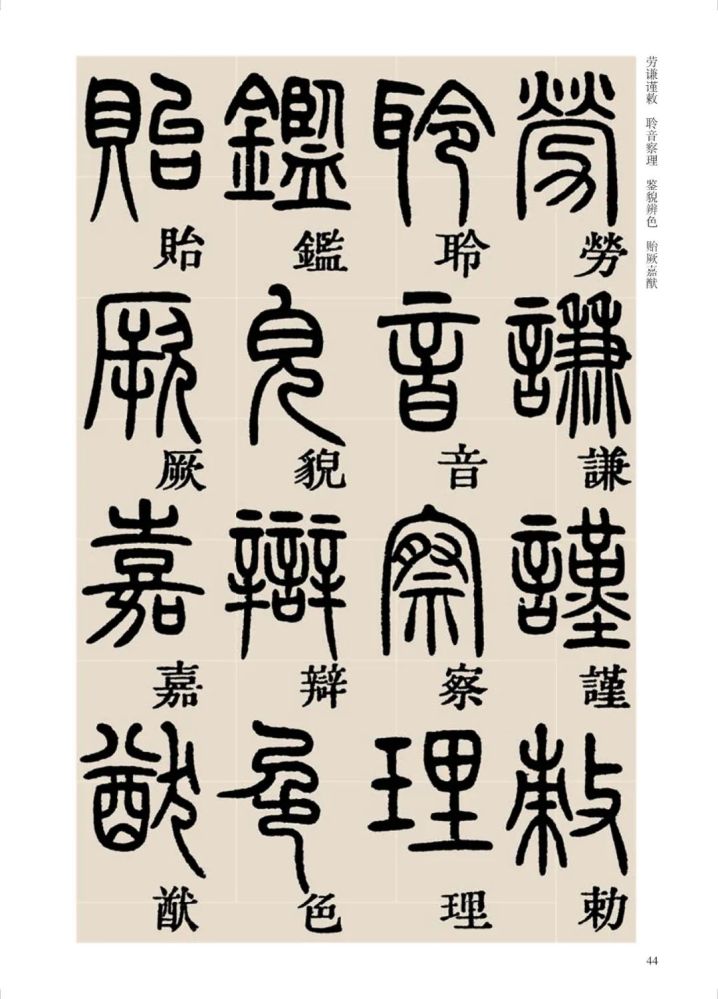
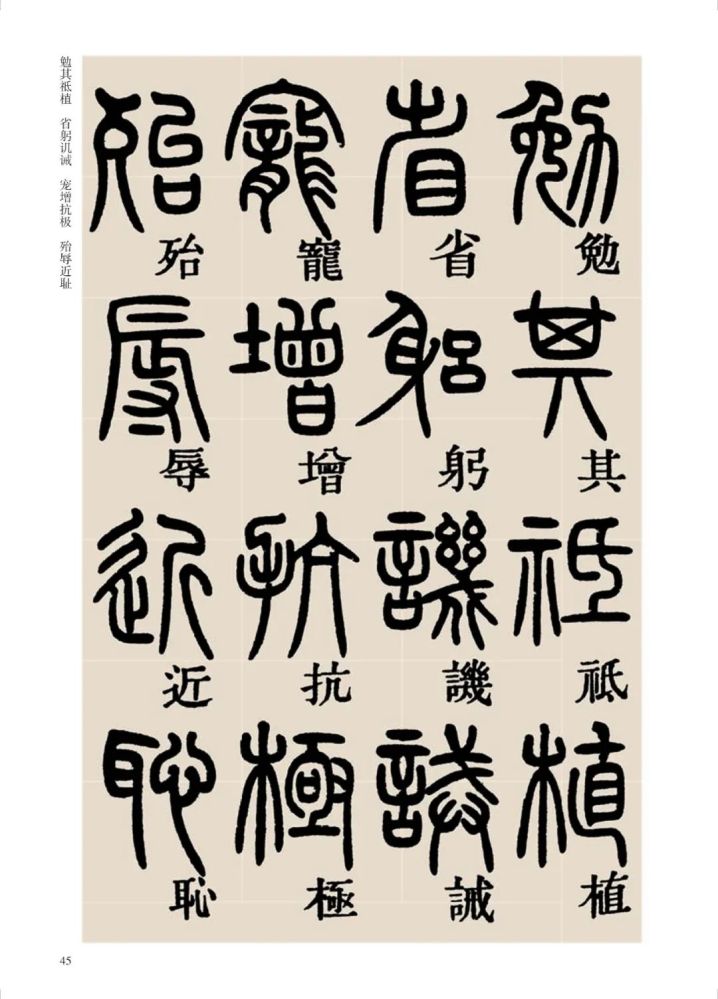
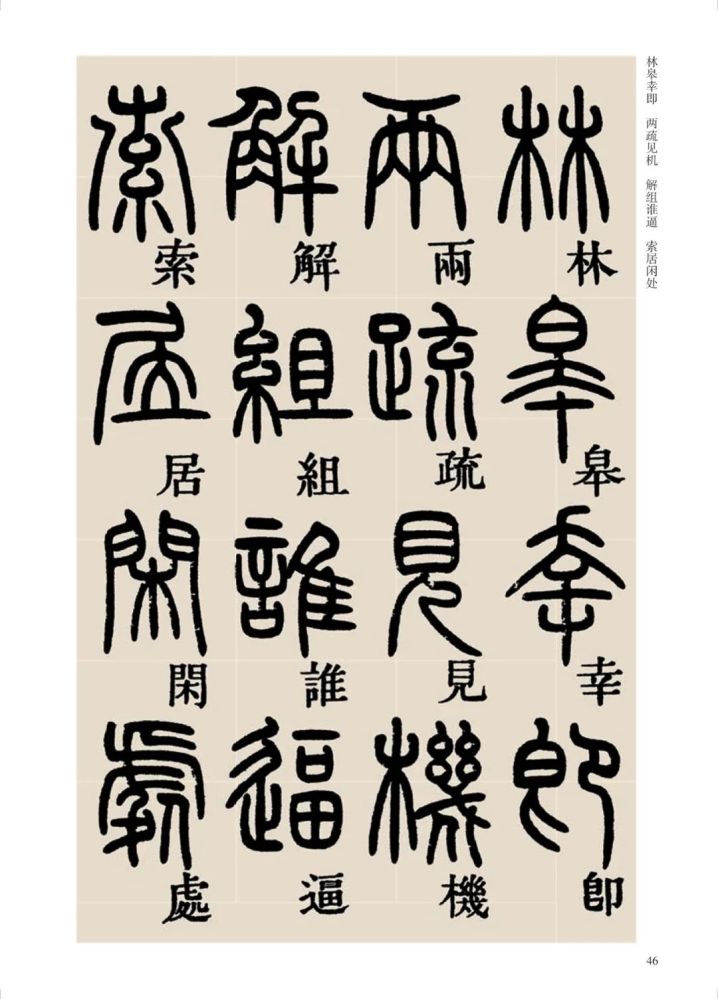
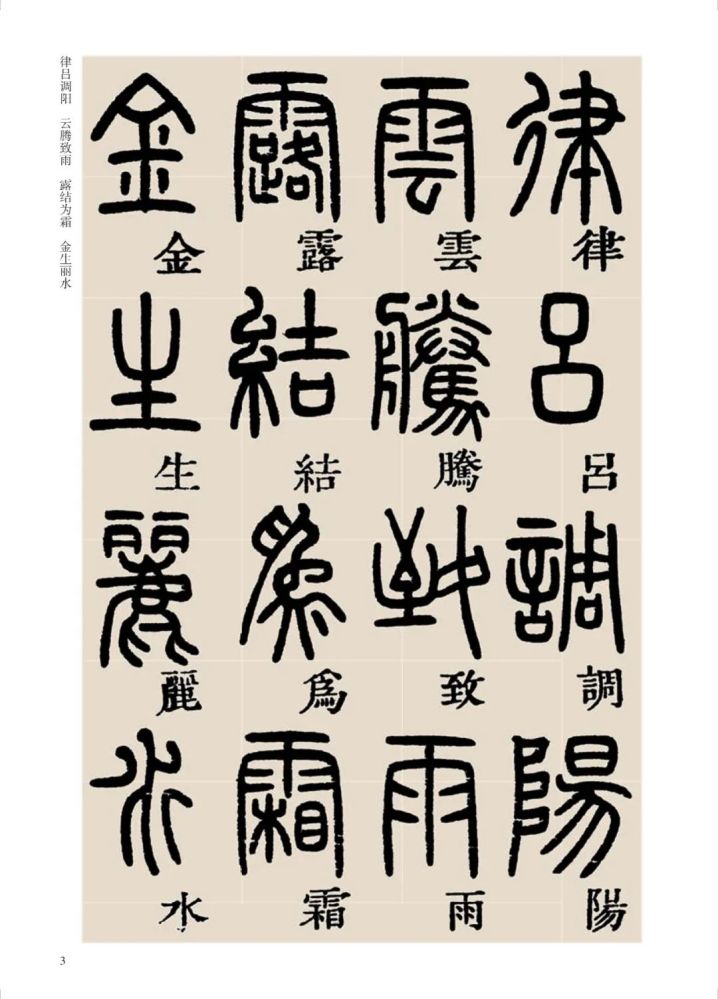
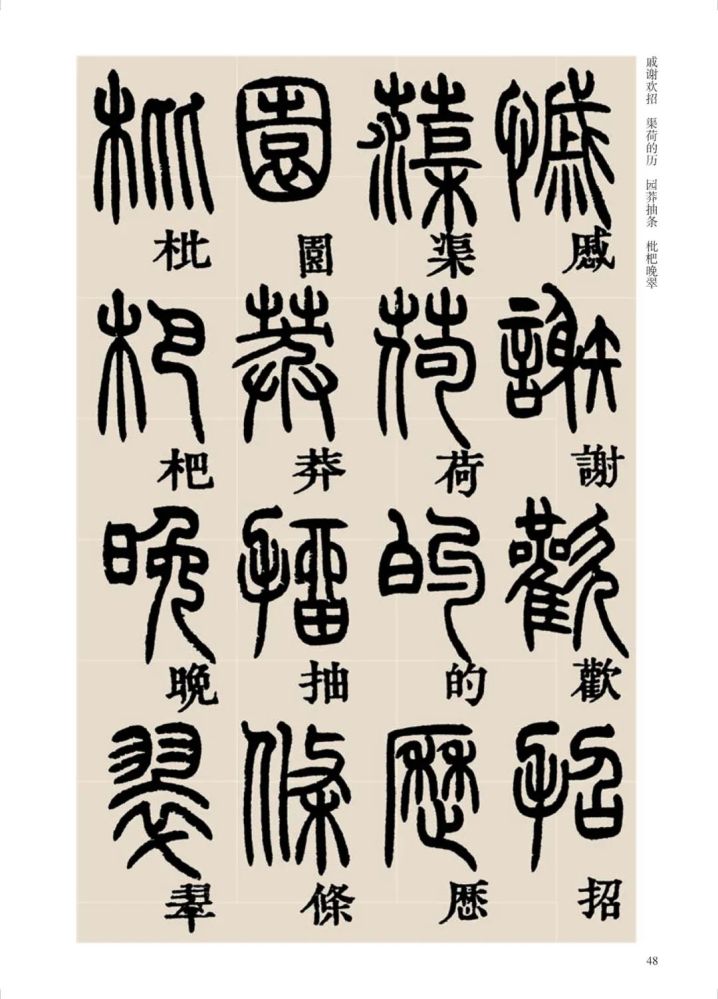
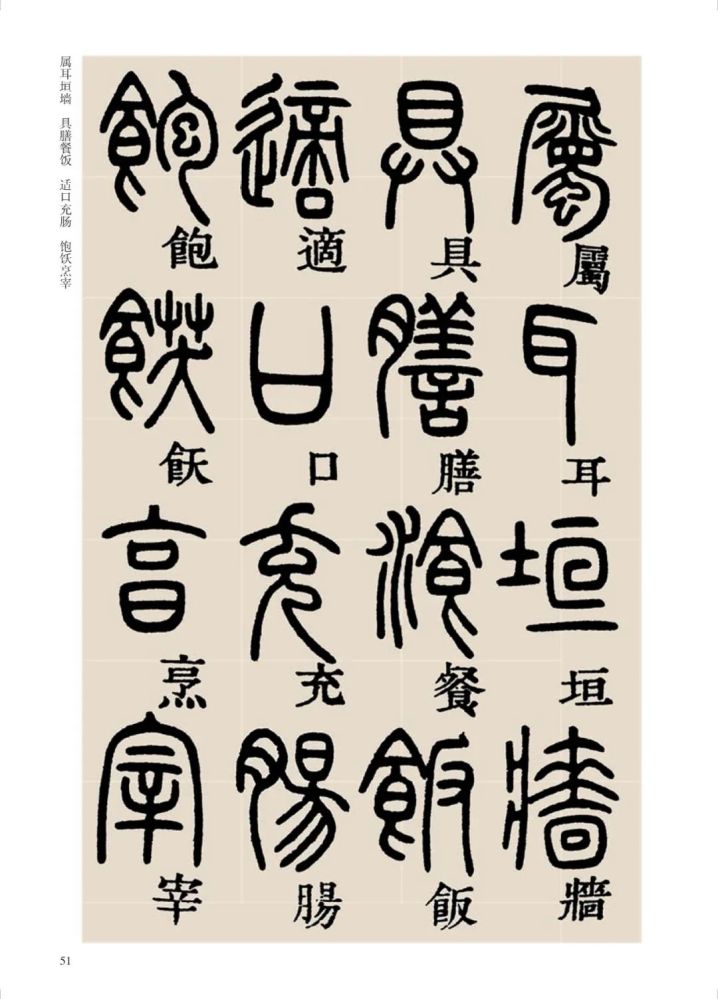
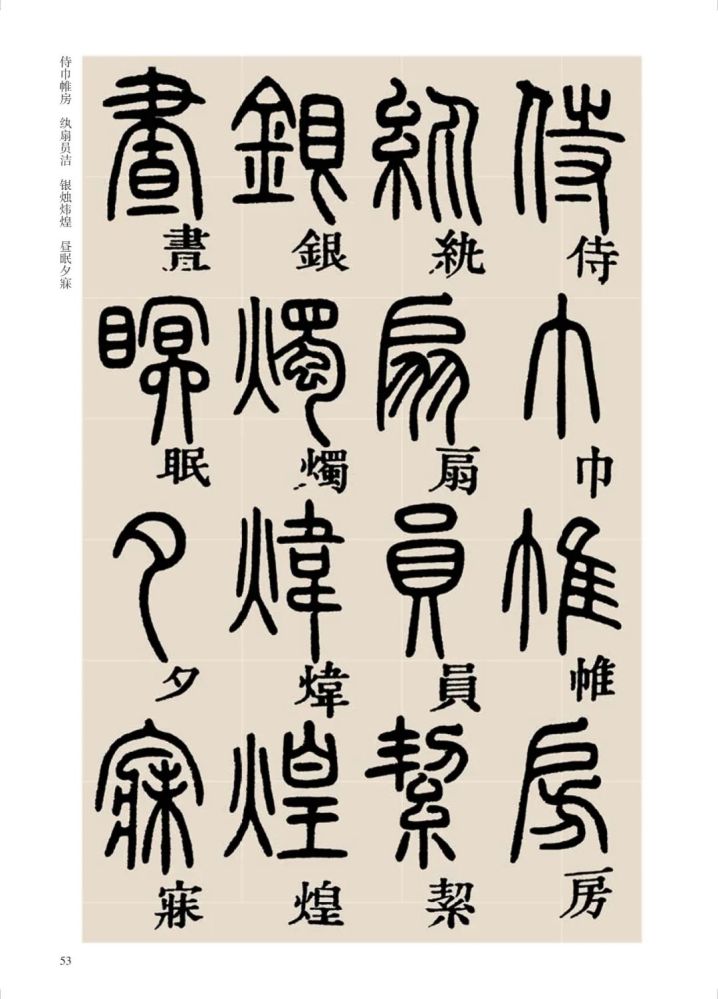
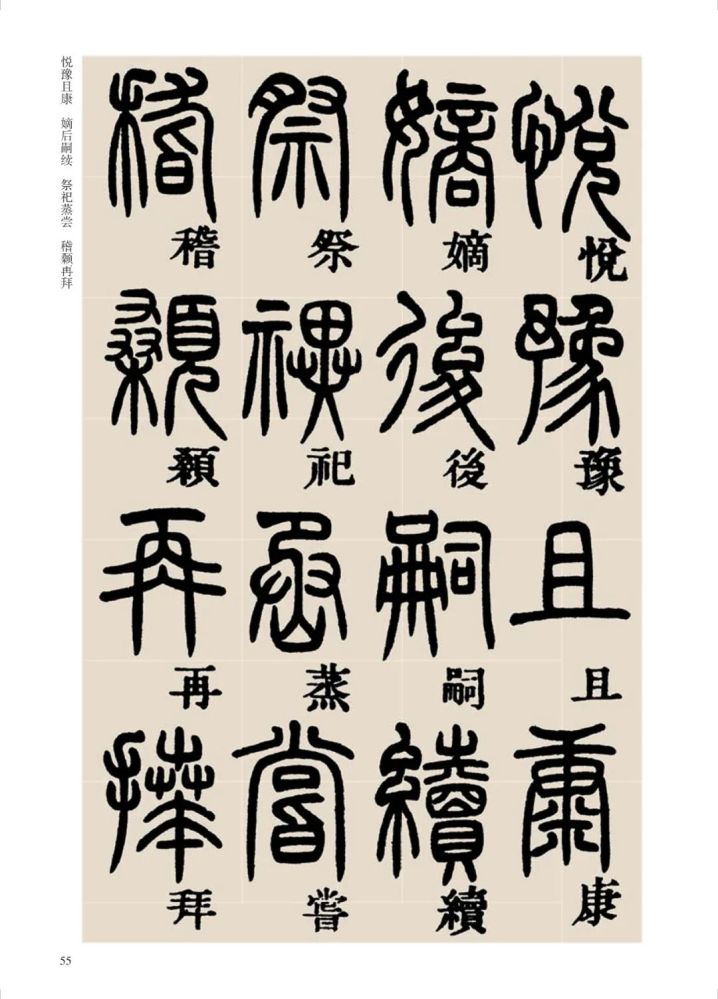
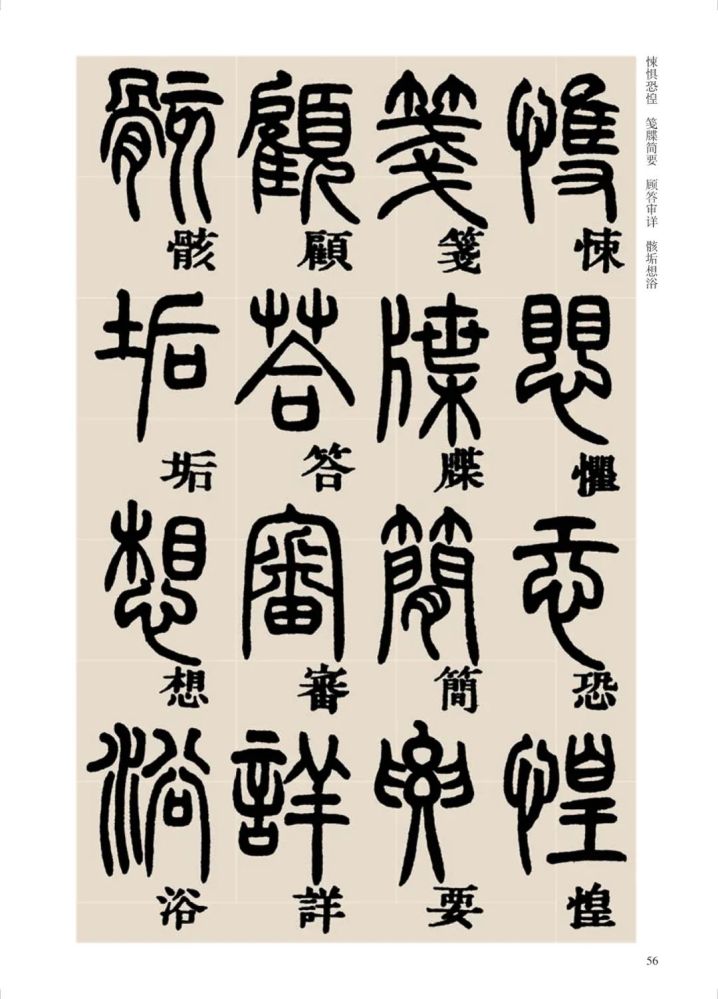
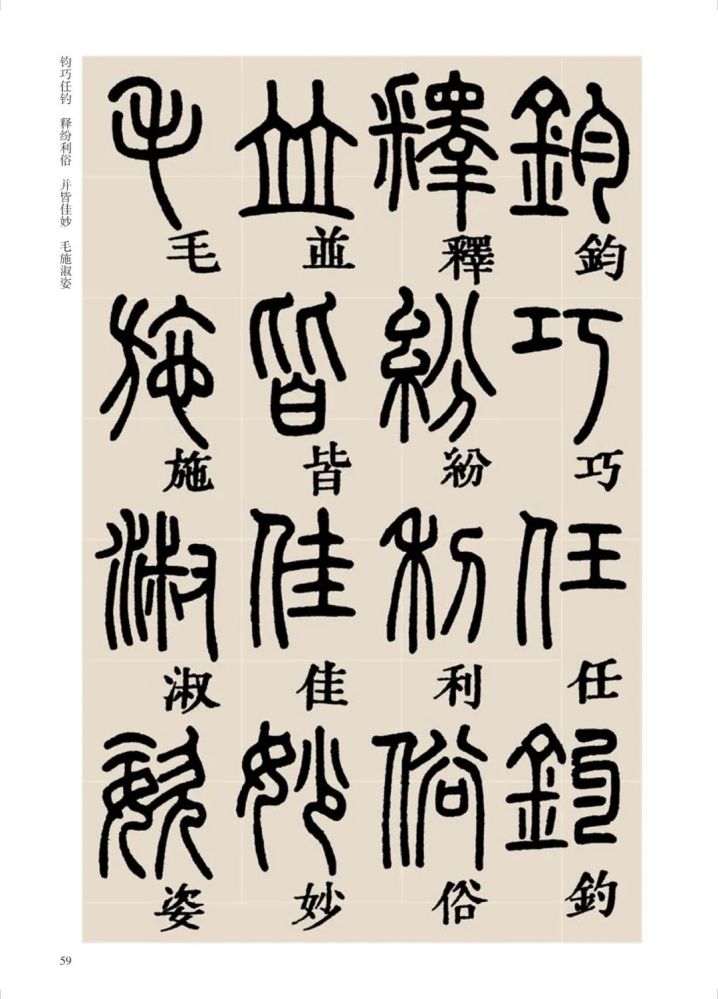
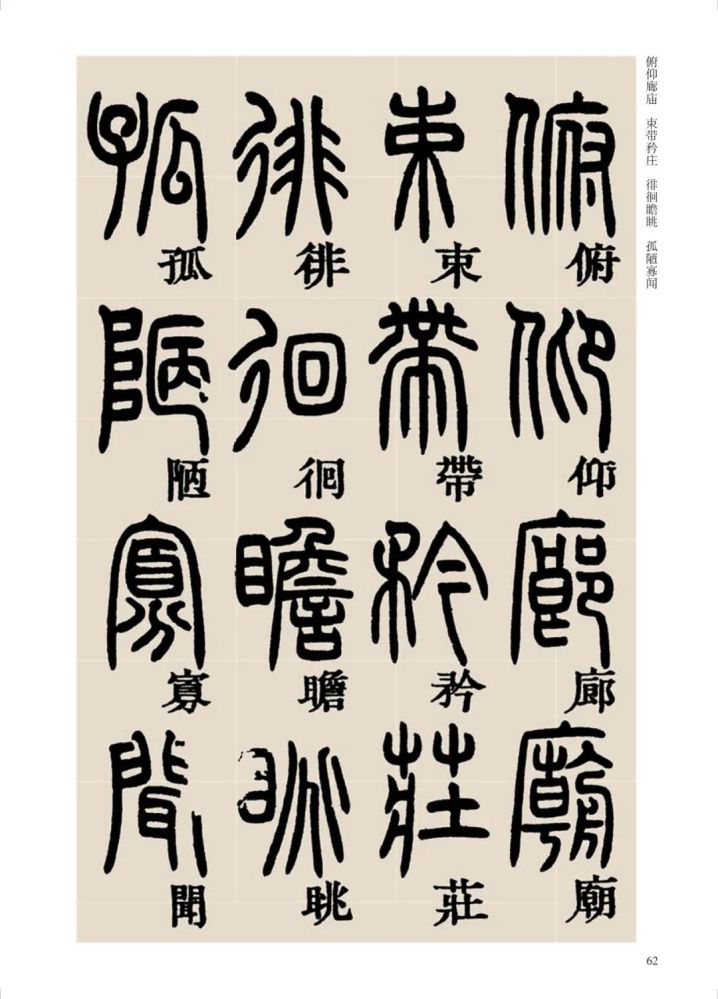
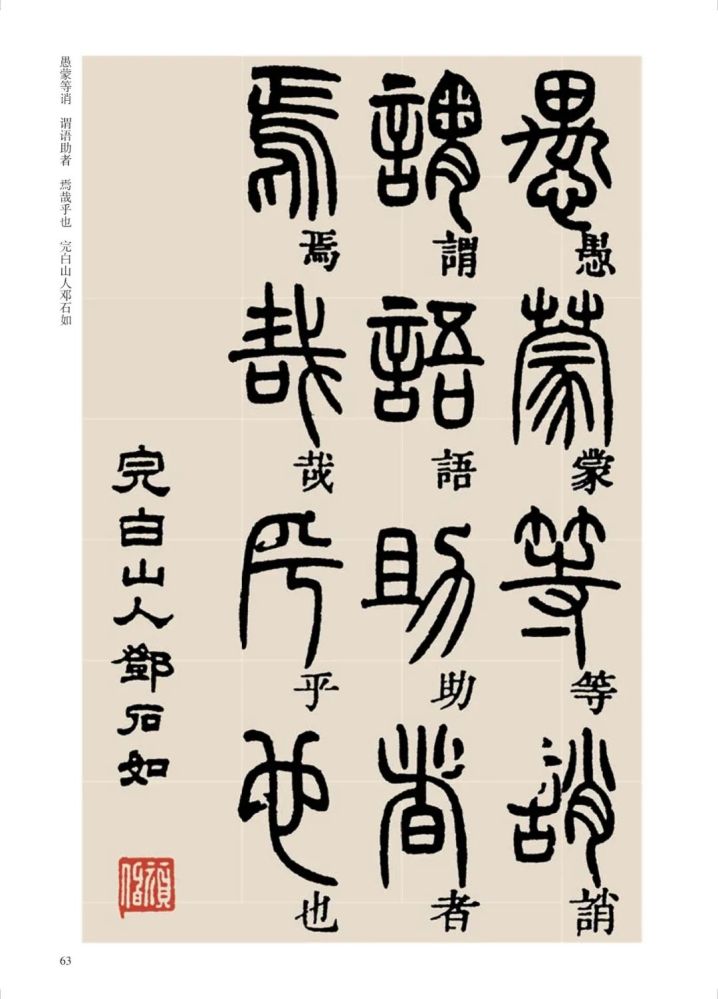
鄧石如《篆書千字文》起筆時方時圓,逆順結合。收筆則孕尖於圓,往往在勻力運筆至末端時略提後鋒露即收,或虛回收筆,既得勁利之健而無虛尖之病。一些方收之筆,在筆至畫末時戛然猝提收筆,有斬釘截鐵的果斷之力。行筆中,中鋒、側鋒、快慢、提按、轉折、駐筆、平移等皆有,特別是在彎曲之處,或用提按之法,得圓暢之意;又或先停後轉法,成外圓內方;又或頓折之法,而見方勁。一字之中往往多法並用,達到婉通與精密的有機結合。鄧石如的篆書筆法,大大的豐富了小篆書寫的過於單一,為篆書打開了一方新天地。
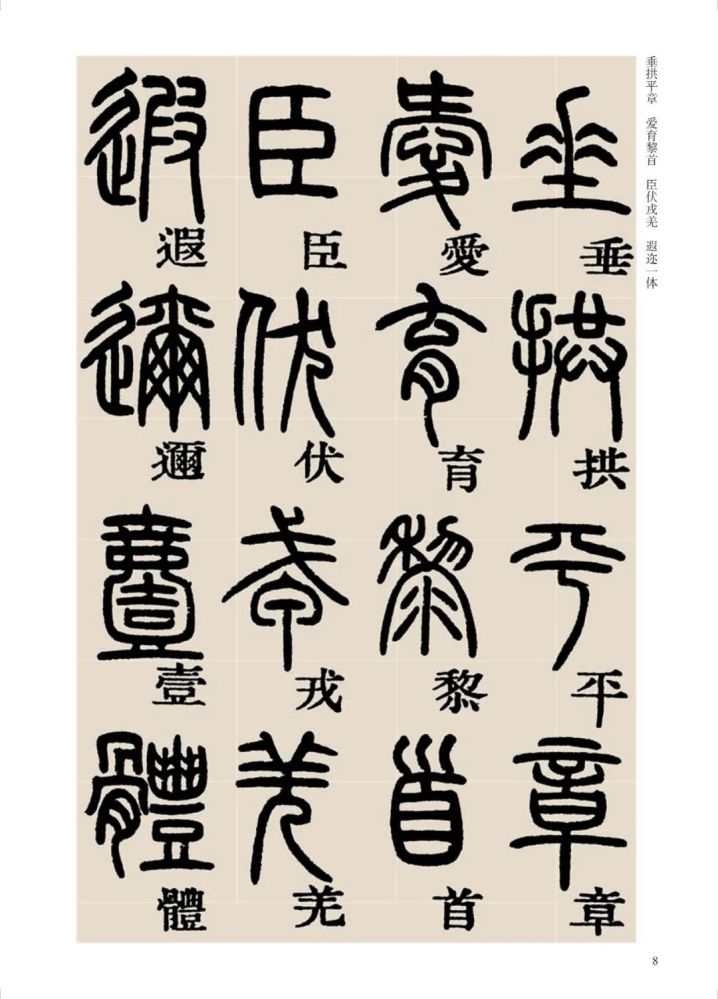
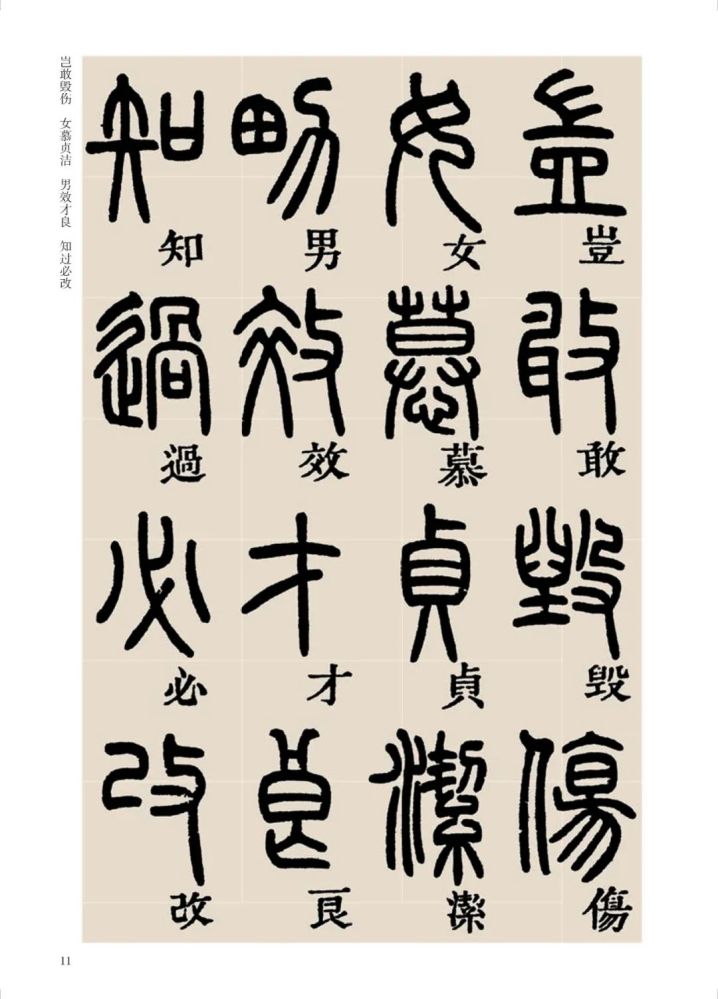
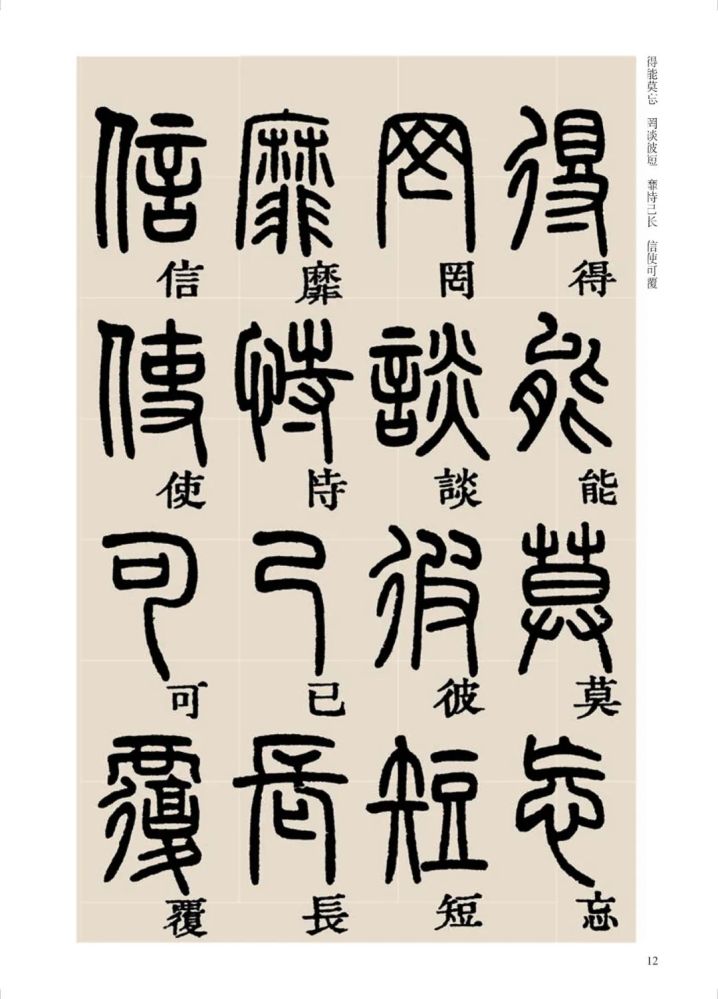
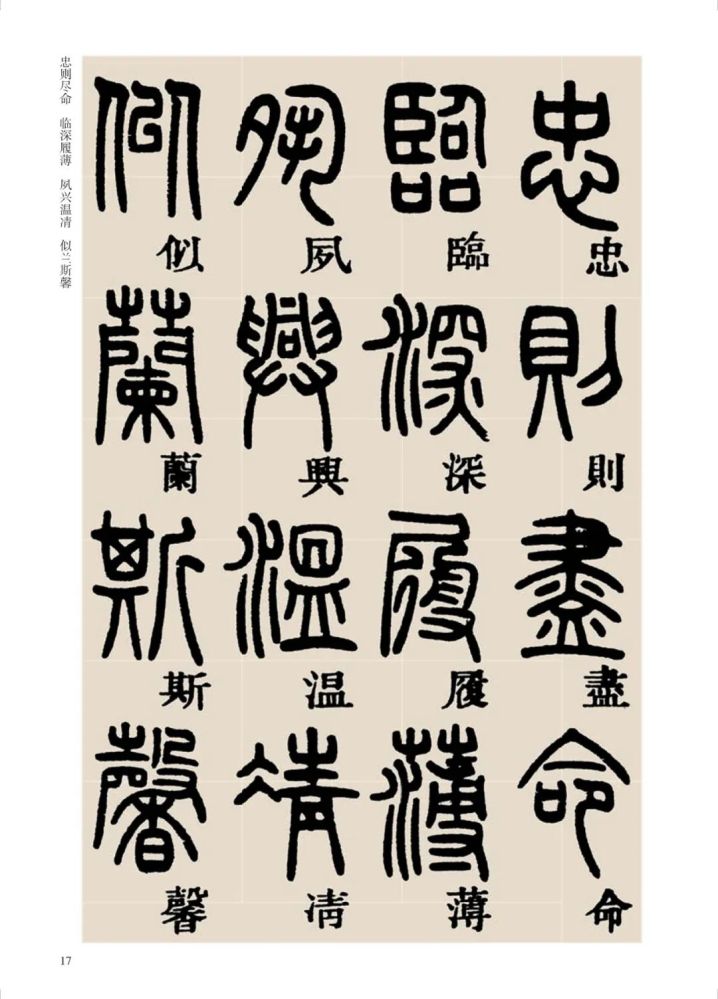
鄧石如篆書千字文:
千字文全文:
天地玄黃 宇宙洪荒 日月盈昃 辰宿列張 寒來暑往 秋收冬藏
閏馀成歲 律呂調陽 雲騰致雨 露結為霜 金生麗水 玉出崑岡
劍號巨闕 珠稱夜光 果珍李柰 菜重芥姜 海咸河淡 鱗潛羽翔
龍師火帝 鳥官人皇 始製文字 乃服衣裳 推位讓國 有虞陶唐
吊民伐罪 週發殷湯 坐朝問道 垂拱平章 愛育黎首 臣伏戎羌
遐邇一體 率賓歸王 鳴鳳在竹 白駒食場 化被草木 賴及萬方
蓋此身發 四大五常 恭惟鞠養 豈敢毀傷 女慕貞潔 男效才良
知過必改 得能莫忘 罔談彼短 靡恃己長 信使可複 器欲難量
墨悲絲染 詩讚羔羊 景行維賢 克念作聖 德建名立 形端表正
空谷傳聲 虛堂習聽 禍因惡積 福緣善慶 尺璧非寶 寸陰是競
資父事君 曰嚴與敬 孝當竭力 忠則盡命 臨深履薄 夙興溫①
似蘭斯馨 如松之盛 川流不息 淵澄取映 容止若思 言辭安定
篤初誠美 慎終宜令 榮業所基 籍甚無竟 學優登仕 攝職從政
存以甘棠 去而益詠 樂殊貴賤 禮別尊卑 上和下睦 夫唱婦隨
外受傅訓 入奉母儀 諸姑伯叔 猶子比兒 孔懷兄弟 同氣連枝
交友投分 切磨箴規 仁慈隱惻 造次弗離 節義廉退 顛沛匪虧
性靜情逸 心動神疲 守真志滿 逐物意移 堅持雅操 好爵自縻
都邑華夏 東西二京 背邙面洛 浮渭據涇 宮殿盤鬱 樓觀飛驚
圖寫禽獸 畫彩仙靈 丙舍傍啟 甲帳對楹 肆筵設席 鼓瑟吹笙
升階納陛 弁轉疑星 右通廣內 左達承明 既集墳典 亦聚群英
杜稿鐘隸 漆書壁經 府羅將相 路俠槐卿 戶封八縣 家給千兵
高冠陪輦 驅轂振纓 世祿侈富 車駕肥輕 策功茂實 勒碑刻銘
②溪伊尹 佐時阿衡 奄宅曲阜 微旦孰營 桓公匡合 濟弱扶傾
綺回漢惠 說感武丁 俊③密勿 多士④寧 晉楚更霸 趙魏困橫
假途滅虢 踐土會盟 何遵約法 韓弊煩刑 起翦頗牧 用軍最精
宣威沙漠 馳譽丹青 九州禹跡 百郡秦並 岳宗泰岱 禪主雲亭
雁門紫塞 雞田赤城 昆池碣石 鉅野洞庭 曠遠綿邈 岩岫杳冥
治本於農 務資稼穡 ⑤載南畝 我藝黍稷 稅熟貢新 勸賞黜陟
孟軻敦素 史魚秉直 庶幾中庸 勞謙謹敕 聆音察理 鑑貌辨色
貽厥嘉猷 勉其祗植 省躬譏誡 寵增抗極 殆辱近恥 林皋幸即
兩疏見機 解組誰逼 索居閑處 沉默寂寥 求古尋論 散慮逍遙
欣奏累遣 戚謝歡招 渠荷的歷 園莽抽條 枇杷晚翠 梧桐蚤凋
陳根委翳 落葉飄搖 遊⑥獨運 凌摩絳霄 耽讀玩市 寓目囊箱
易⑦攸畏 屬耳垣牆 具膳餐飯 適口充腸 飽飫烹宰 飢厭糟糠
親戚故舊 老少異糧 妾禦績紡 侍巾帷房 紈扇圓⑧ 銀燭煒煌
晝眠夕寐 藍筍象床 弦歌酒宴 接杯舉觴 矯手頓足 悅豫且康
嫡後嗣續 祭祀⑨嘗 稽顙再拜 悚懼恐惶 箋牒簡要 顧答審詳
骸垢想浴 執熱願涼 驢騾犢特 駭躍超驤 誅斬賊盜 捕獲叛亡
布射僚丸 嵇琴阮嘯 恬筆倫紙 鈞巧任釣 釋紛利俗 ⑩皆佳妙
毛施淑姿 工顰妍笑 年矢每催 曦暉朗曜 璇璣懸斡 晦魄環照
指薪修祜 永綏吉劭 矩步引領 俯仰廊廟 束帶矜莊 徘徊瞻眺
孤陋寡聞 愚蒙等誚 謂語助者 焉哉乎也

























 World Zen Art Center